
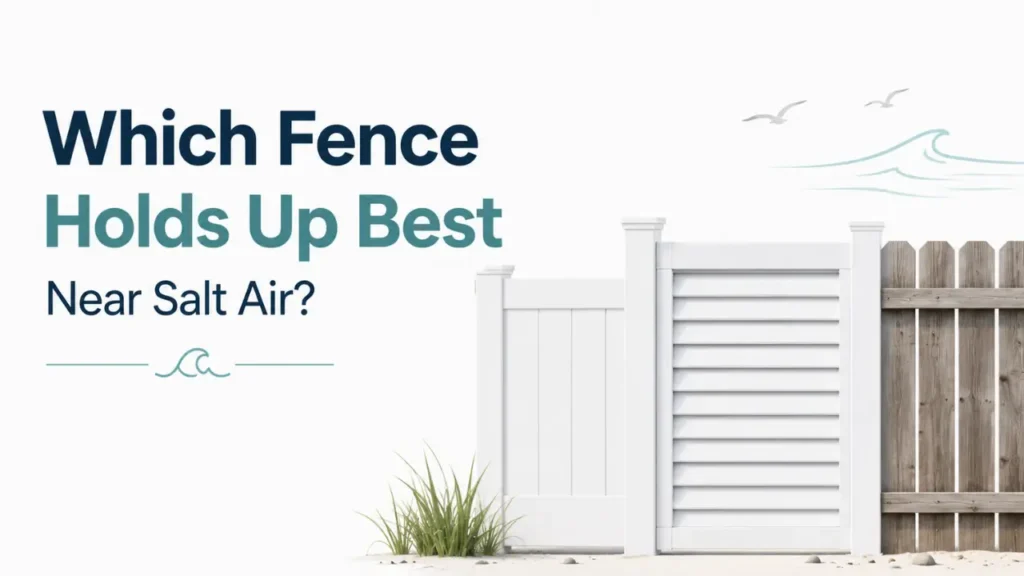
Which Fence Holds Up Best Near Salt Air?
If you live near the ocean, choosing the right fence material is more important than many homeowners realize. While coastal living offers stunning views and refreshing sea breezes, salt air can be extremely damaging to outdoor structures. Fences exposed to salt, moisture, strong winds, and changing temperatures often deteriorate much faster than those located inland.
The good news is that some fencing materials are specifically designed to withstand these harsh conditions. Understanding which fence holds up best near salt air can help you make a smart investment that lasts for decades while maintaining your home’s appearance and value.
Why Salt Air Damages Fences
Salt particles carried by coastal winds settle on fence surfaces every day. Over time, this exposure can lead to:
- Rust and corrosion on metal fences
- Rot and decay in wood fencing
- Fading and discoloration
- Structural weakening
- Increased maintenance requirements
In coastal areas like Massachusetts, Rhode Island, and other New England shoreline communities, these issues can become significant if the wrong fencing material is chosen.
The Best Fence Materials for Salt Air Environments
1. Vinyl Fencing – The Best Overall Choice
For most coastal homeowners, vinyl fencing is considered the best all-around option.
Why Vinyl Performs So Well
Unlike wood or metal, vinyl does not absorb moisture and cannot rust. Salt air has very little effect on high-quality vinyl fencing, making it an ideal choice for oceanfront properties.
Benefits of Vinyl Fencing
- Resistant to salt corrosion
- Won’t rot, warp, or crack from moisture
- Low maintenance
- Easy to clean
- Long lifespan of 20–30 years or more
- Available in numerous styles and colors
Vinyl fences only require occasional washing to remove salt buildup and maintain their appearance.
Potential Drawbacks
- Higher upfront cost compared to some wood options
- Extreme impacts may cause cracking
Despite the higher initial investment, many homeowners find that reduced maintenance costs make vinyl the most cost-effective solution over time.
2. Aluminum Fencing – Best for Ocean Views
Aluminum fencing is another excellent option for properties exposed to salt air.
Why Aluminum Resists Coastal Conditions
Modern aluminum fences are powder-coated, creating a protective barrier that prevents corrosion and rust.
Benefits of Aluminum Fencing
- Exceptional rust resistance
- Minimal maintenance
- Strong yet lightweight
- Long lifespan
- Elegant appearance
- Preserves scenic views
Because aluminum fences don’t block visibility, they are especially popular for waterfront homes.
Potential Drawbacks
- Limited privacy
- Higher installation costs than chain-link fencing
For homeowners who prioritize aesthetics and durability, aluminum is one of the strongest performers in coastal environments.
3. Composite Fencing – Premium Durability
Composite fencing combines recycled wood fibers and plastic materials to create a highly weather-resistant product.
Why Composite Handles Salt Air Well
Composite materials resist moisture, insects, and decay far better than traditional wood.
Benefits of Composite Fencing
- Resistant to rot and warping
- Excellent moisture protection
- Attractive wood-like appearance
- Low maintenance
- Long-lasting performance
Potential Drawbacks
- Higher purchase price
- Heavier installation requirements
Many homeowners choose composite fencing when they want the look of natural wood without the maintenance challenges.
4. Cedar Fencing – Best Natural Wood Option
If you prefer real wood, cedar is generally the best choice for coastal environments.
Why Cedar Performs Better Than Other Woods
Cedar contains natural oils that help resist insects and moisture damage.
Benefits of Cedar Fencing
- Natural beauty
- Better moisture resistance than pine
- Environmentally friendly
- Can be stained or painted
Potential Drawbacks
- Requires regular maintenance
- Salt air can shorten lifespan
- Periodic sealing is necessary
While cedar performs better than many wood species, it still requires more upkeep than vinyl or aluminum.
Fence Materials That Struggle Near Salt Air
Untreated Wood
Untreated wood is highly vulnerable to:
- Rot
- Mold growth
- Warping
- Moisture absorption
Standard Steel Fencing
Without specialized coatings, steel fences can rust quickly in coastal environments.
Low-Quality Metal Components
Even if the fence material is durable, cheap screws, hinges, and brackets may corrode rapidly when exposed to salt air.
Additional Tips for Coastal Fence Longevity
Use Marine-Grade Hardware
Stainless steel hardware offers superior corrosion resistance.
Wash Fences Periodically
Fresh water rinses help remove salt deposits before they cause damage.
Schedule Annual Inspections
Regular inspections allow homeowners to identify minor issues before they become expensive repairs.
Reinforce Against Coastal Winds
Proper installation and deeper post settings can improve storm resistance and overall durability.
Which Fence Material Lasts the Longest Near Salt Air?
For most coastal properties, the ranking is:
| Rank | Fence Material | Salt Air Resistance | Maintenance |
|---|---|---|---|
| 1 | Vinyl | Excellent | Very Low |
| 2 | Aluminum | Excellent | Very Low |
| 3 | Composite | Very Good | Low |
| 4 | Cedar | Moderate | High |
| 5 | Coated Chain-Link | Moderate | Low |
Final Thoughts
When it comes to salt air exposure, not all fencing materials perform equally. Coastal homeowners need fencing that can withstand moisture, corrosion, strong winds, and year-round weather conditions.
For the best combination of durability, longevity, and low maintenance, vinyl fencing remains the top choice for most oceanfront properties. Aluminum fencing follows closely behind, particularly for homeowners who want to preserve scenic views while enjoying exceptional corrosion resistance. Composite fencing offers premium performance, while cedar remains the best natural wood alternative.
By choosing a fence specifically designed for coastal conditions, you’ll enjoy a stronger, more attractive property boundary that stands up to salt air for many years to come.