

Best Fence for Pool Safety: Top Materials & CPSC Rules
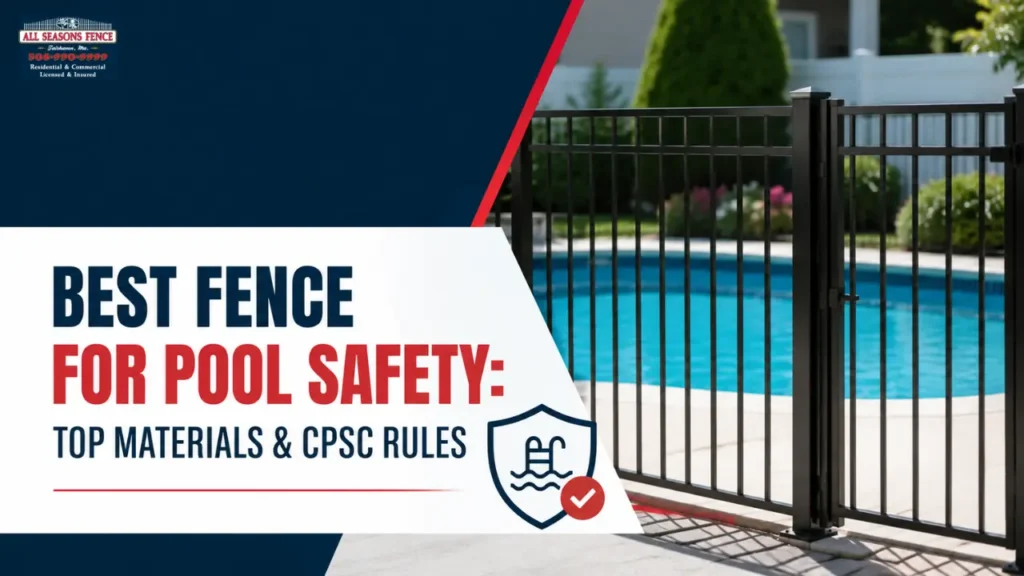
A backyard swimming pool is a wonderful luxury, but it comes with immense legal and moral responsibility. According to the U.S. Consumer Product Safety Commission (CPSC), drowning remains the leading cause of unintentional death among children aged 1 to 4. A professionally installed pool safety fence is your primary physical barrier to prevent unauthorized access and keep your family, pets, and neighbors safe.
But with options ranging from classic wrought iron to modern removable mesh, which material genuinely provides the highest level of security?
The short answer is that the best fence for pool safety is one that is at least 48 inches tall, entirely climb-resistant, and equipped with an outward-opening, self-closing, self-latching gate. However, the right material for your home depends heavily on your budget, privacy needs, and maintenance preferences.
This comprehensive guide breaks down the safest pool fencing materials, critical federal safety standards, and how to choose the perfect barrier for your property.
Strict Legal Standards: The CPSC Pool Barrier Guidelines
Before comparing fencing materials, you must understand the structural rules that define a legal “safety barrier.” While local building codes vary by state and municipality, most residential insurance policies and local laws are modeled directly after the CPSC guidelines.
An effective pool fence must eliminate three things: the ability for a child to go over, under, or through it.
| Requirement Metric | CPSC Safety Standard | Why It Matters |
| Minimum Height | 48 inches (4 feet) from the ground up | Prevents toddlers from easily scaling or tumbling over the top. |
| Ground Clearance | Maximum 4 inches above solid ground (2 inches on grass/gravel) | Stops a small child or pet from squeezing underneath the panels. |
| Vertical Picket Spacing | Maximum 4 inches apart (1.75 inches if horizontal rails are close) | Prevents a child’s head or torso from passing through the pickets. |
| Horizontal Rail Spacing | Must be at least 45 inches apart if on the exterior side | Eliminates horizontal rails from acting as a ladder or foothold. |
| Gate Direction | Must open outward (away from the pool area) | If a child pushes against an unlatched gate, it swings shut instead of open. |
| Latch Height | Minimum 54 inches from the ground | Keeps the release mechanism completely out of reach for young children. |
The Top 5 Pool Fencing Materials Compared
Different materials offer distinct advantages depending on whether your priority is uninterrupted visibility, absolute privacy, or structural durability.
1. Aluminum and Ornamental Steel (The Gold Standard)
For the vast majority of residential homes, aluminum is considered the best overall material for pool safety. It combines exceptional strength with zero structural maintenance.
- Safety Advantages: Aluminum fences use vertical pickets that are naturally climb-resistant because they offer no horizontal footholds. They also allow completely unobstructed lines of sight from your house to the water, ensuring you can always see the pool area.
- Durability: Unlike iron, aluminum will never rust, chip, or rot when exposed to splashing pool chemicals or lawn sprinklers.
- Best For: Homeowners seeking permanent, long-term safety with a clean, classic aesthetic.
2. Removable Mesh Fencing (Best for Flexibility)
Mesh pool fences are explicitly engineered for child safety. They consist of tension-backed woven mesh panels supported by aluminum posts inserted into sleeves drilled directly into your concrete pool deck.
- Safety Advantages: The woven mesh fabric is completely smooth, making it absolutely impossible for a child to get a toehold or climb it.
- The Flexibility Factor: If you are hosting an adult-only gathering, the entire mesh system can be unlatched, rolled up, and stored away in minutes.
- Keep in Mind: For the highest safety rating, choose a mesh fence that locks firmly into the deck sleeves so it cannot be pulled up or bypassed by an adventurous child without tools.
3. Vinyl (PVC) Fencing (Best for Complete Privacy)
Vinyl fencing uses solid plastic panels to block the pool area from outside views completely.
- Safety Advantages: A solid vinyl privacy fence provides an exceptional physical barrier because there are no vertical gaps or horizontal rails to climb. It also blocks the pool from view, removing the temptation for neighborhood children to sneak in.
- The Blind Spot Risk: While privacy is great, solid panels create a major safety blind spot. You cannot see into the pool area from your house or patio, meaning you lose the ability to monitor the water at a glance.
- Best For: Properties where the pool is already highly visible from the main living spaces, but protection from neighbors is desired.
4. Wrought Iron (Best for Maximum Strength)
Wrought iron offers an incredibly heavy, unyielding perimeter barrier that can withstand heavy impacts.
- Safety Advantages: Completely unbendable pickets offer elite security and excellent visibility.
- The Maintenance Downside: Wrought iron is highly susceptible to rust when exposed to moisture and chlorine. It requires routine sanding, priming, and painting to prevent structural degradation, particularly around the ground gates and hinges.
5. Wood Fencing (Best for Natural Aesthetics)
A classic wood privacy or picket fence can easily protect a pool, provided it is designed with safety rules in mind.
- The Climb Hazard Warning: If you install a standard wood privacy fence, the horizontal structural rails must face the inside (pool side) of the yard. If the rails face outward, they act exactly like a ladder, allowing children to climb over effortlessly.
- Upkeep Constraints: Wood warps, shrinks, and shifts over time due to humidity and soil changes. A warped gate can prevent a self-latching safety mechanism from clicking into place, creating a massive safety hazard.
The Most Critical Component: The Self-Closing Gate
No matter how strong or expensive your fencing material is, the entire safety system fails if a gate is left propped open or fails to latch. A pool fence is only as secure as its gate.
When choosing or inspecting your pool gate, ensure it features:
- Tension-Adjustable Hinges: These spring-loaded hinges ensure that even if the gate is opened just a few inches, it has enough mechanical force to swing completely shut on its own.
- Magnetic Latches: Industry-standard magnetic latches (such as the MagnaLatch) use a powerful magnetic pull to lock the gate instantly when it swings shut, eliminating the friction resistance that often causes mechanical latches to stick open.
- Key-Locking Mechanisms: When the pool is closed for the winter or you are traveling, the gate should be physically locked with a key or digital passcode.
Don’t Forget Pets and Local Wildlife
While child safety is the primary driver of pool fence regulations, animal safety is a major secondary factor.
- Small Breeds & Cats: If you have small pets, standard 4-inch picket gaps might be wide enough for them to slip through and fall into the water. Consider a mesh barrier or a puppy-panel modification (tighter vertical spacing at the bottom of the fence).
- Large Dogs: High-energy breeds can easily clear a standard 4-foot fence if motivated. If you own large dogs, consider upgrading your pool perimeter fence to a height of 5 or 6 feet.
- Regional Wildlife Laws: In certain coastal or southern regions, local building ordinances mandate specific heavy-duty perimeters to prevent local wildlife—such as alligators, venomous snakes, or snapping turtles—from entering residential swimming areas. Aluminum and reinforced vinyl are highly effective at blocking these ground-level intruders.
Essential Seasonal Maintenance Checklist
To ensure your pool barrier stays fully compliant and secure year-round, run through this inspection checklist at the start of spring and autumn:
- Test the Gate Autoclose: Open the gate fully and let it go. Does it latch? Now open it only two inches and let go. If it fails to latch from a narrow angle, tighten the spring tension on the hinges.
- Check the Ground Clearance: Inspect the soil and grass underneath the panels. Has erosion or pet digging created a gap wider than 4 inches? Pack any low spots with compact gravel or dirt.
- Verify Rigidity: Lean firmly against the posts. If there is any significant wobble, it means the concrete footings beneath the ground have cracked or shifted due to soil changes. Call a professional contractor to re-set the post immediately.
- Clear Climbable Objects: Walk the exterior perimeter. Make sure patio chairs, tables, pool filters, firewood stacks, or large planters are at least 3 feet away from the fence so they cannot be used as climbing platforms.
Frequently Asked Questions
Does an above-ground pool need a safety fence?
Yes. If your above-ground pool has water deeper than 18 to 24 inches, most local laws require a safety barrier. This can be achieved by installing an approved pool-top safety railing directly onto the pool’s structure, alongside a lockable or removable ladder system.
Can I use my house wall as one side of the pool fence?
Many local codes allow your home’s exterior wall to act as the fourth side of your pool enclosure. However, if you choose this setup, every door and window leading from the house directly to the pool area must be equipped with a high-decibel audible alarm that sounds instantly when opened, or a self-closing mechanism installed on the doors.
Is a pool safety cover a legal alternative to a fence?
In some jurisdictions, an ASTM-approved motorized, power safety cover that completely seals the water can be accepted as a primary safety barrier. However, standard solar covers or winter tarps do not qualify as safety covers and are actually severe drowning hazards if a child falls onto them. A physical fence remains the most reliable option.
Summary: Making Your Choice
When selecting the ideal pool barrier, balance your aesthetic goals with ironclad functionality:
- Choose Aluminum if you want permanent, zero-maintenance safety with perfect visibility.
- Choose Removable Mesh if you have temporary safety needs (e.g., young grandkids visiting) and want to reclaim your open deck later.
- Choose Vinyl if blocking the wind and securing total backyard privacy is your top priority.
Investing in a professionally built, code-compliant pool fence gives you complete peace of mind, allowing you to relax and enjoy your outdoor oasis safely.
Need help securing your backyard? Contact All Seasons Fence Company today for a professional consultation and custom pool safety fence installation built to last.