

When Should You Repair vs Replace a Fence?
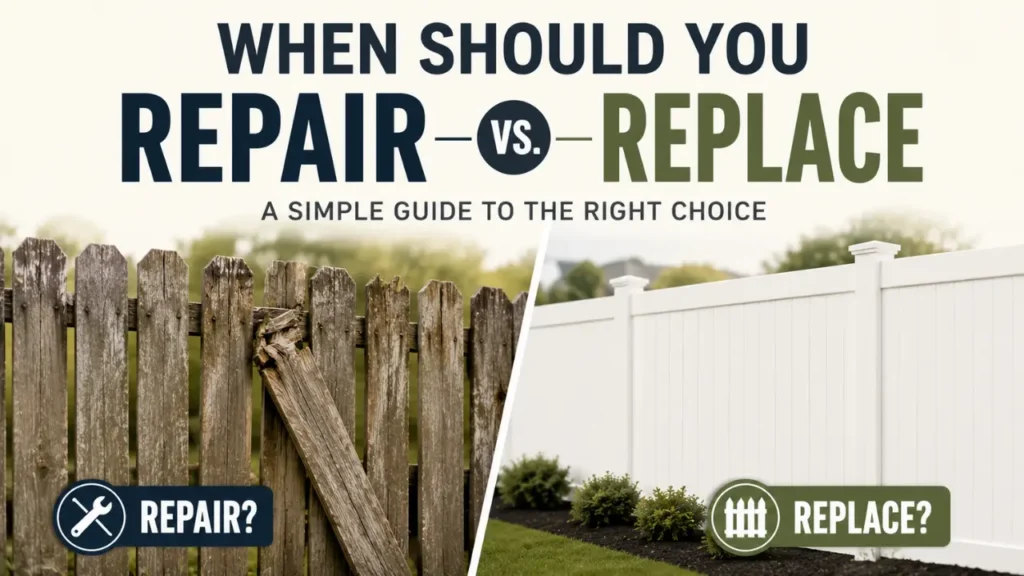
A fence plays an important role in protecting your property, enhancing curb appeal, and providing privacy. However, like any outdoor structure, fences experience wear and tear over time. Weather conditions, moisture, pests, and accidental damage can all impact a fence’s lifespan. When damage occurs, homeowners often face a common question: should you repair the fence or replace it entirely?
Making the right decision can save you money while ensuring your property remains secure and attractive. In this guide, we’ll help you determine whether fence repair or replacement is the best option for your situation.
Signs That Fence Repair Is the Better Choice
In many cases, a damaged fence does not require complete replacement. Small or isolated issues can often be repaired quickly and affordably.
1. Minor Structural Damage
If only a few boards, pickets, or panels are damaged, repairing the affected sections is usually the most cost-effective solution. This is common after minor storms, accidental impacts, or normal aging.
2. Loose or Leaning Fence Posts
A fence that leans slightly may not need complete replacement. If the issue is caused by one or two loose posts, those posts can often be reinforced or replaced while keeping the rest of the fence intact.
3. Small Areas of Rot
Wood fences can develop rot over time, especially in areas exposed to moisture. If the rot is limited to a small section, replacing the damaged boards may restore the fence without requiring a full rebuild.
4. Cosmetic Issues
Peeling paint, faded stain, or minor cracks can usually be addressed through maintenance and repairs. These issues affect appearance more than structural integrity.
5. Fence Is Relatively New
If your fence is only a few years old and the damage is isolated, repairs are generally the best option. Replacing an otherwise healthy fence would be unnecessary and costly.
Signs That Fence Replacement Is the Smarter Investment
While repairs can solve many problems, there are situations where replacement makes more financial and practical sense.
1. Extensive Rot or Decay
When a significant portion of a wood fence is rotting, repairing individual sections may only provide a temporary fix. Extensive decay often indicates that the fence has reached the end of its lifespan.
2. Multiple Damaged Posts
Fence posts provide the foundation for the entire structure. If several posts are failing, replacing them individually can become expensive and time-consuming. In these cases, a full replacement may be more efficient.
3. Severe Storm Damage
Massachusetts weather can bring strong winds, heavy snow, and coastal storms. If large sections of your fence are broken, leaning, or missing after a storm, replacement may offer better long-term value than repeated repairs.
4. Frequent Repair Costs
If you’re constantly spending money on repairs, those costs can quickly add up. When repair expenses approach 50% or more of the cost of a new fence, replacement is often the more economical choice.
5. Aging Fence Near End of Life
Every fence material has a lifespan:
- Wood fences: 15–20 years
- Vinyl fences: 20–30 years
- Aluminum fences: 30+ years
- Chain-link fences: 20–25 years
If your fence is nearing the end of its expected lifespan, investing in replacement can prevent ongoing maintenance headaches.
Cost Considerations
Many homeowners focus solely on the immediate cost of repairs versus replacement. However, it’s important to consider long-term value.
Repair Costs
Fence repairs are generally less expensive upfront and work well when damage is limited. Common repairs include:
- Replacing damaged boards
- Reinforcing posts
- Fixing gates
- Repainting or staining
Replacement Costs
A full fence replacement requires a larger initial investment, but it provides:
- Improved durability
- Better appearance
- Increased property value
- Reduced maintenance costs
- Updated materials and design options
If major portions of the fence are compromised, replacement often delivers a better return on investment.
Material Matters
Different fence materials respond differently to damage.
Wood Fences
Wood fences are repair-friendly because individual boards can be replaced. However, widespread rot, insect damage, or warping may signal the need for replacement.
Vinyl Fences
Vinyl fences are highly durable, but cracked panels can sometimes be difficult to match if the fence is older. Extensive damage may require replacing larger sections.
Aluminum Fences
Aluminum fences typically last for decades with minimal maintenance. Repairs are often limited to damaged sections unless the fence has experienced significant impact damage.
Chain-Link Fences
Chain-link fences can usually be repaired by replacing sections of mesh or damaged posts. Full replacement is generally only necessary when the entire fence is heavily rusted or deteriorated.
Questions to Ask Before Deciding
Before choosing between repair and replacement, consider the following:
- How old is the fence?
- Is the damage isolated or widespread?
- How often has the fence needed repairs?
- Will repairs restore structural integrity?
- What is the estimated repair cost compared to replacement?
A professional fence inspection can provide valuable insight and help you avoid unnecessary expenses.
Final Thoughts
The decision to repair or replace a fence depends on the extent of the damage, the age of the fence, and your long-term goals. Minor issues such as loose boards, isolated rot, or cosmetic damage can often be repaired successfully. However, widespread deterioration, repeated repair needs, and significant storm damage may make replacement the better investment.
By carefully evaluating your fence’s condition and considering both short-term costs and long-term value, you can choose the option that best protects your property and enhances its appearance for years to come.