
Stop Dog Escapes for Good: Smart Ways to Pet-Proof Your Fence
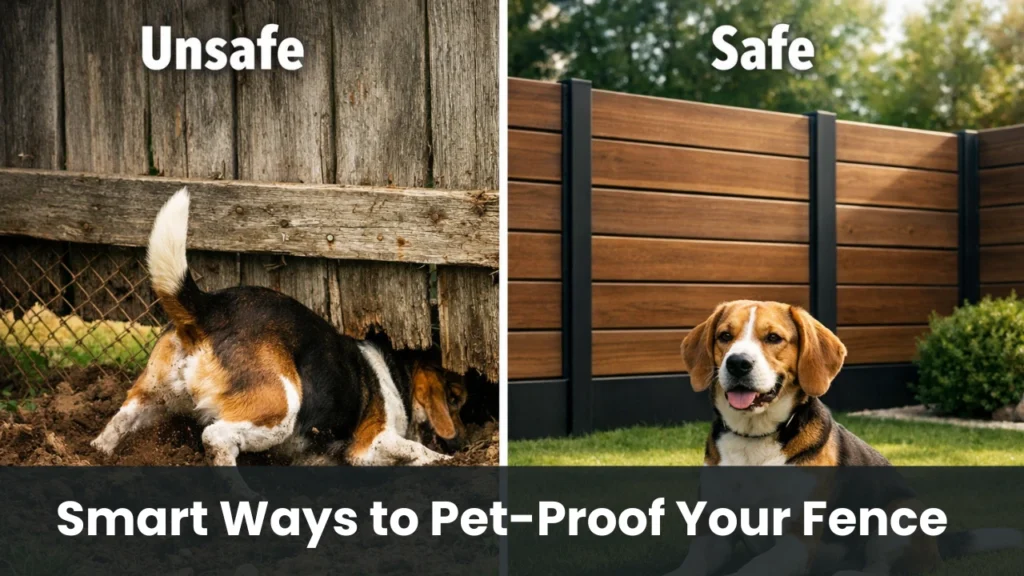
A fence is meant to protect your home—but if you have pets, it needs to do more than just mark boundaries. Dogs digging under panels, squeezing through gaps, or jumping over fences are common problems many homeowners face.
That’s why pet-proofing your fence is essential. It not only keeps your pets safe but also prevents accidents, escapes, and costly damage. In this guide, you’ll learn practical, effective ways to pet proof a fence and create a secure outdoor space.
Why Pet-Proofing Your Fence Matters
Pet-proof fencing is about safety, control, and peace of mind. Without proper reinforcement:
- Dogs may dig under the fence
- Small pets can slip through gaps
- Active breeds may jump or climb over
- Pets can get injured or lost
A properly secured fence ensures your pet stays safely within your yard—no matter their size or behavior.
1. Reinforce the Bottom of Your Fence (Stop Digging)
One of the most common escape methods is digging.
Solutions:
- Bury wire mesh or chicken wire 6–12 inches below ground
- Install L-footer barriers (mesh bent outward underground)
- Use concrete footing or gravel trench for high diggers
These methods create a physical barrier that prevents pets from tunneling under your fence.
2. Close Gaps and Openings
Even small gaps can be an escape route—especially for smaller dogs or puppies.
What to Check:
- Space between fence panels
- Gaps under gates
- Loose or broken boards
Fixes:
- Add mesh or wire backing
- Install gap blockers or boards
- Adjust gate alignment
3. Increase Fence Height (Prevent Jumping)
If your dog is athletic, a short fence won’t stop them.
Recommended Heights:
- Small dogs: 4–5 feet
- Medium dogs: 5–6 feet
- Large/jumping breeds: 6+ feet
Extra Protection:
- Install coyote rollers (rolling bars at the top)
- Add angled extensions to prevent climbing
4. Eliminate Climbing Aids
Dogs often use objects near fences to climb over.
Remove:
- Furniture near the fence
- Wood piles or storage items
- Raised landscaping features
Tip:
Keep a clear buffer zone along the fence line to reduce jumping leverage.
5. Secure Gates Properly
Gates are one of the weakest points in any fence.
Improve Gate Security:
- Install self-closing hinges
- Use lockable or pet-proof latches
- Seal gaps at the bottom or sides
A secure gate ensures your pet can’t push or slip through.
6. Choose the Right Fence Material
Not all fences are equally pet-friendly.
Best Options:
- Vinyl fencing: No gaps, smooth surface (hard to climb)
- Wood privacy fences: Solid and customizable
- Composite fencing: Durable and low-maintenance
- Chain-link (with modifications): Add mesh for smaller pets
Avoid designs with wide spacing or horizontal rails that make climbing easier.
7. Add Visual Barriers (Reduce Escaping Behavior)
Sometimes pets try to escape because they see distractions outside.
Solutions:
- Install privacy panels or slats
- Add plants or hedges along the fence
- Use fence screens
This helps reduce barking, anxiety, and escape attempts.
8. Use Digging Deterrents
If your dog loves digging, go beyond barriers.
Options:
- Place rocks or pavers along the fence line
- Use pet-safe deterrent sprays
- Create a designated digging zone elsewhere
9. Regular Fence Maintenance
Even the best fence won’t stay secure without upkeep.
Inspect Regularly:
- Loose boards or panels
- Rusted metal parts
- Soil erosion under the fence
Fixing small issues early prevents bigger problems later.
Common Mistakes to Avoid
- Ignoring small gaps (pets will find them)
- Choosing style over security
- Not considering your dog’s size and behavior
- Skipping regular inspections
Final Thoughts
Learning how to pet proof a fence is about understanding your pet’s behavior and reinforcing weak points.
By combining:
- Strong materials
- Proper height
- Gap protection
- Digging prevention
You can create a safe, secure, and pet-friendly yard.